

You have signed the contract, paid the deposit, and now you are waiting. What actually happens next is a question most Jamaican business owners never get a straight answer to before their first website project. They know a website will eventually appear, but the stretch of weeks in between feels like a black box.
This article walks through what a normal website build looks like in Jamaica, stage by stage, so you know what to expect and where delays usually come from.
Table of contents
- Before the contract: the consultation and quote
- Discovery: understanding your business
- Wireframes and design
- Development: building the real thing
- Content and revisions
- Testing and launch
- What actually slows a project down
- Frequently asked questions
Before the contract: the consultation and quote
A serious web design process in Jamaica usually starts with a conversation, not a contract. A developer asks about your business, who your customers are, what you want the site to do (sell products, generate leads, simply exist as a professional address), and what similar businesses you admire or want to avoid looking like. From that conversation, you should walk away with a written quote and a rough timeline, not a verbal promise.
If a developer skips this step and jumps straight to a price, that is worth noticing. Our guide on how to choose the right web developer in Jamaica covers the warning signs to watch for before you sign anything.
Discovery: understanding your business
Once the contract is signed, discovery comes first. The developer maps out your site’s structure here: how many pages, what goes on each one, and how a visitor moves from the homepage to a purchase, a booking, or a phone call. For a small business site, this typically takes one to two weeks.
Rushing discovery is one of the most common reasons a project runs long later. A structure decided in five minutes tends to get rebuilt in week six, once it becomes clear the original plan does not match how customers actually think about the business. Two weeks spent getting this right at the start usually saves more than two weeks of rework later.
Wireframes and design
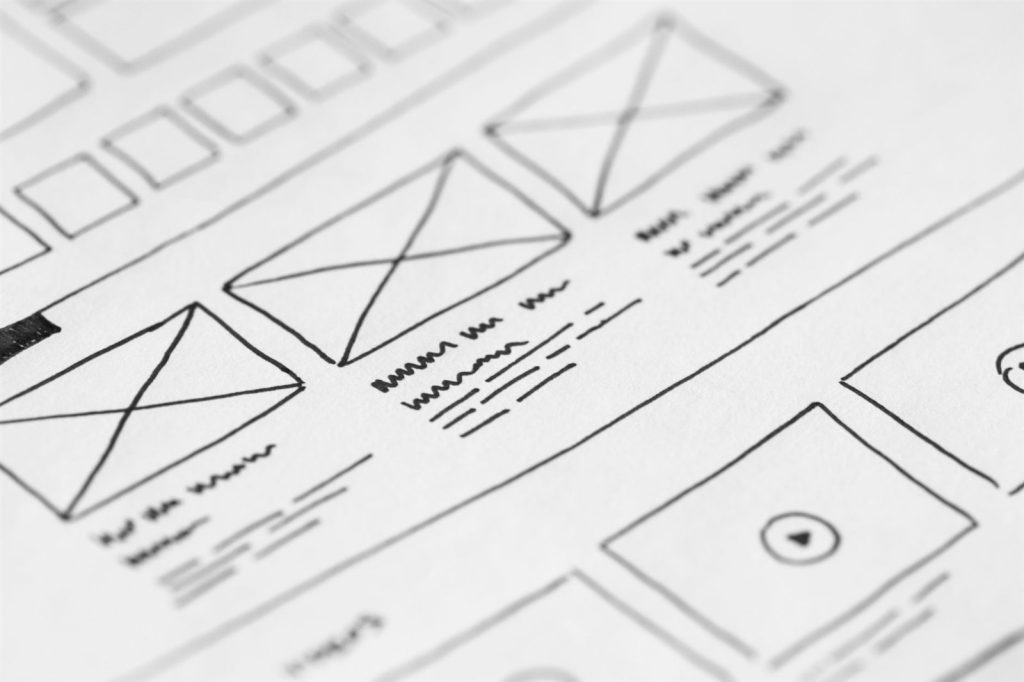
Next comes the visual layer. Wireframes are simple, unstyled blueprints that show where things go: the menu, the headline, the call-to-action button, the product grid. Once the layout is agreed, the developer applies your actual brand colors, fonts, and imagery to produce a full design mockup.
You should be most involved right here. Look at the mockup on both a phone and a computer screen (most of your Jamaican customers will see your site on a phone first), and be specific with feedback. “Make the logo bigger” is useful. “I don’t love it” is not. A design phase for a small business site generally takes one to three weeks, depending on how many rounds of revisions you need.
 Photo by
 Development: building the real thing
Once the design is approved, development begins. This is where the static mockup becomes an actual, functioning website: pages get built, forms get connected, the online store gets wired up to a payment gateway if you are selling products, and the whole thing gets made to work properly across browsers and devices. On WordPress, this stage includes theme setup, plugin installation, and custom coding for anything the theme cannot handle out of the box.
Development is usually the longest single stage, often three to six weeks for a small to mid-sized business site. It is also the stage where you will hear the least from your developer, since most of the work is technical and does not produce something visible to check in on daily.
 Photo by
 Content and revisions
Content, meaning your actual words, product photos, and business details, is the part that most often slows a build down, and it is usually the client’s side of the process, not the developer’s. Gathering product descriptions, writing an About page, and sourcing decent photography takes real time, especially when you are running the business at the same time. If you are also still working through the basics of registering or formalizing the business itself, the Jamaica Business Development Corporation offers free guidance that pairs well with this stage of a website project.
Set aside dedicated hours for this rather than treating it as something to squeeze in between customers. A developer waiting on content cannot move forward on the pages that need it, and that wait counts against your overall timeline the same as any other delay.
Testing and launch
Before a site goes live, it gets tested: every form submitted, every link clicked, every page checked on a slow mobile connection (a real concern in parts of Jamaica where connectivity is inconsistent). Testing and final fixes typically take one to two weeks.
Launch itself is a short, technical moment: pointing your domain at the new site, confirming an SSL certificate is active, and making sure nothing breaks in the switch. A good developer schedules this for a low-traffic time and has a rollback plan in case something goes wrong. After launch, you should get basic training on how to update your own content, so you are not calling the developer every time you want to change a price.
What actually slows a project down
Across most delayed website projects, three culprits show up again and again: slow content delivery from the client, scope changes mid-build (deciding you want a booking system after development has already started), and unclear feedback during revisions (“it needs to pop more” is not actionable). None of these are unusual or embarrassing. They are the normal friction of building something new while running a business. Naming them up front, and building buffer time into the schedule for them, is what separates a realistic eight-week timeline from a project that quietly drags into month four.
For a fuller breakdown of typical costs at each stage, see our guide on how much a business website costs in Jamaica.
Frequently asked questions
How long does a typical website build take in Jamaica?
A small business website typically takes six to eight weeks from signed contract to launch, covering discovery, design, development, and testing. Larger or e-commerce sites can take longer, often ten to twelve weeks, depending on how many products or custom features are involved. The single biggest variable is how quickly the client delivers content and feedback.
What do I need to prepare before the website build starts?
Have your business logo, brand colors (if you have them), a list of the products or services you want featured, and any existing product photos ready before discovery begins. You do not need finished website copy on day one, but knowing your key messages and what makes your business different speeds up the discovery phase considerably.
How many rounds of revisions should I expect during the design phase?
Most developers include two to three rounds of revisions in a standard quote. Use the first round for structural feedback (layout, navigation, missing sections) and later rounds for finer details (colors, spacing, wording). Revisions requested after development has started cost more time and sometimes more money, since changes touch code rather than just a design file.
Can I see the website before it goes live?
Yes. A staging site, a working version of your website on a private, unpublished link, is standard practice during development. You should be able to click through every page and test forms before the developer points your actual domain at the finished site. If a developer will not show you a staging link before launch, ask why.
What happens if I need changes after the website launches?
Most contracts include a short warranty period, often 30 days, covering bug fixes at no extra cost. Beyond that, ongoing changes are usually billed either hourly or through a maintenance retainer. Ask what is included post-launch before you sign, since this varies significantly between developers.
